
Editors note: This is a piece based on my experience in the news industry. Sources of information are provided at the end of the article. Cover image: College of Charleston
If you have uttered the words Fake News… you might need critical thinking.
If you think 75% of the news is made up of very bad people…you might need critical thinking.
If you only get your news from the same source and refuse to believe any other source… you DEFINITELY need critical thinking.
Why do I need critical thinking to watch the news? Don’t they tell me everything?
Let’s keep it simple. Critical thinking in news, at it’s most basic core, is the ability to analyze news messages across platforms and channels. It’s viewing a story on FOX News and then looking up the same story on CNN. Compare and contrast those stories. What is the same? What is different? Is there a slant? Once you look at the information critically, only then can you begin your research.
Yes. You have to do research. In my experience lack of research is at the core of the “fake news” epidemic. Nobody wants to do the work research requires. We want to read a headline and share it without any obligation. That’s the other problem.
We don’t think we have an obligation to do research. As a journalist, it was my job to provide information to the masses and be a watchdog for the people with the most accurate information possible. It is NOT my job to digest it for you and understand it for you. Three people can read the same story and take away three different meanings behind it. I went through a great exercise demonstrating this concept at Fort Leavenworth, Kansas. Don’t worry, I was in leadership school not in prison. Anyway, it’s pretty much impossible to make everyone understand the information the same way. Therefore it’s up to each person to take the information and analyze, ask questions and research.
How does one become news literate?
Follow all forms of media and news outlets. Do not just stick with the news that follows what you think is and should be true. Read a diverse selection of newspapers (yes they still exist, purchase digital subscriptions to your local newspaper right now). Switch up the news channels you watch. Watch or read the WHOLE story. Pay attention to datelines and who is producing the story. Click on reporter and writer bios. Do they work for legitimate news outlets? Have you at least heard of the news outlet?
Social media is a great monitoring source. Seriously. I can create a list on Twitter and include a variety of news outlets. I can then pull up that list and monitor what they are putting out. Are they concerned about the same issues? What is different? What is similar?
It’s not just about news media. In today’s world, anyone can create content and put out information. You need to make sure you know who you are getting your information from. Take this very blog for example. Who the heck am I? Why is what I have to say so special? Why do I think I have the right to tell you anything? For starters, look at my bio. You will see that I spent more than 13 years as a news journalist. You will also see that I have two communications degrees from reputable universities. I am pretty easy to find on social media. I am up front on where I work and what I do for a living. Does everyone do that? Does everyone whose information you accept give you a reason, other than you agree with them, to trust them?
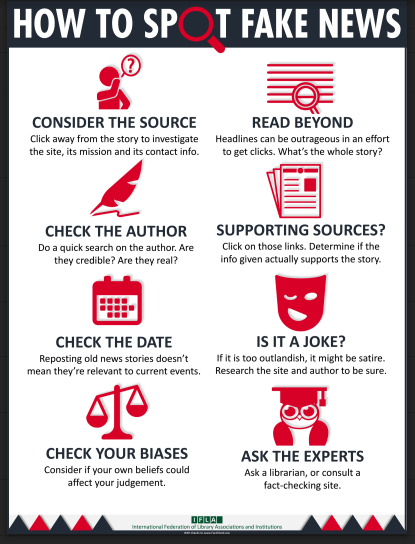
I love this poster from Adelphi University! If you take away nothing else from my musings, take away this:
How does understanding critical thinking help the news industry?
You are informed to the highest level. Any good journalist wants to tell the story and inform the masses. A good journalist also knows that they are not the be all end all source of information. Understanding news and how it operates allows the journalist to focus on their job and not worry if you are competent in receiving and understanding the information. They should not have to “dumb down” their reports. You need to rise up.
How does one begin to think critically?
Critical thinking is hard. It requires a lot of effort and must be continually practiced. I have a little book on my desk called “Critical Thinking Concepts & Tools” that I refer to often. There are also some great websites that offer some great pointers on your critical thinking journey.
Critical thinking on the media’s messages
 Digital Kuiper